Best Used Cars for Dubai Weather – Which Models Handle UAE Heat Best

Toyota Land Cruiser and similar models are built specifically for Gulf conditions — stronger cooling systems and heat-resistant components make them reliable in UAE heat.
In this guide:
- Why some cars perform better in UAE heat than others
- GCC-spec vs. parallel import vehicles
- Best used cars for Dubai conditions by budget
- Cars to avoid in the UAE market
- What to check for heat-related wear
- Maintenance tips for hot climate driving
Why Car Choice Matters in Dubai
Dubai's climate is extreme. Summer temperatures regularly exceed 45°C (113°F), and the sun's intensity is relentless. A car that performs well in a temperate climate may struggle in the UAE. The cooling system works harder, the engine runs hotter, the transmission fluid breaks down faster, and the interior materials degrade more quickly.
Cars built specifically for the Gulf market (GCC-spec vehicles) have stronger cooling systems, larger radiators, heat-resistant rubber seals, and engine management systems calibrated for extreme heat. Parallel imports — cars built for export markets like Europe or North America — often lack these specifications and perform noticeably worse in UAE conditions.
GCC-Spec vs. Parallel Import Vehicles
GCC-spec vehicles are built for the Gulf market from the factory. They have:
- Larger radiators and stronger cooling systems
- Heavy-duty air conditioning compressors
- Heat-resistant rubber seals and hoses
- Engine management systems calibrated for high ambient temperatures
- Reinforced suspension for rough roads and high-speed driving
Parallel import vehicles are built for other markets and imported privately. They look identical to GCC-spec models but lack the heat-specific engineering. In UAE conditions, they tend to:
- Run hotter — cooling systems struggle with sustained high temperatures
- Have AC compressor failures more frequently
- Experience premature rubber seal degradation
- Show higher rates of transmission fluid breakdown
- Have more electrical issues in extreme heat
When buying a used car in Dubai, always verify that it is GCC-spec. Ask the seller for the chassis number and check through the RTA or a dealer — they can confirm the market specification.
Best Cars Under AED 30,000
Toyota Corolla (2015–2018) — The most reliable used car in the UAE under AED 30,000. GCC-spec models are common, parts are cheap, and the cooling system is robust. Look for models with full service history.
Nissan Altima (2014–2017) — Strong cooling system and reliable transmission. GCC-spec versions are common in the UAE. Check for transmission smooth shifts and no overheating history.
Honda Accord (2014–2016) — Good reliability and strong AC system. Parts availability is good. Check for any transmission issues — some model years had problems.
Best Cars AED 30,000–60,000
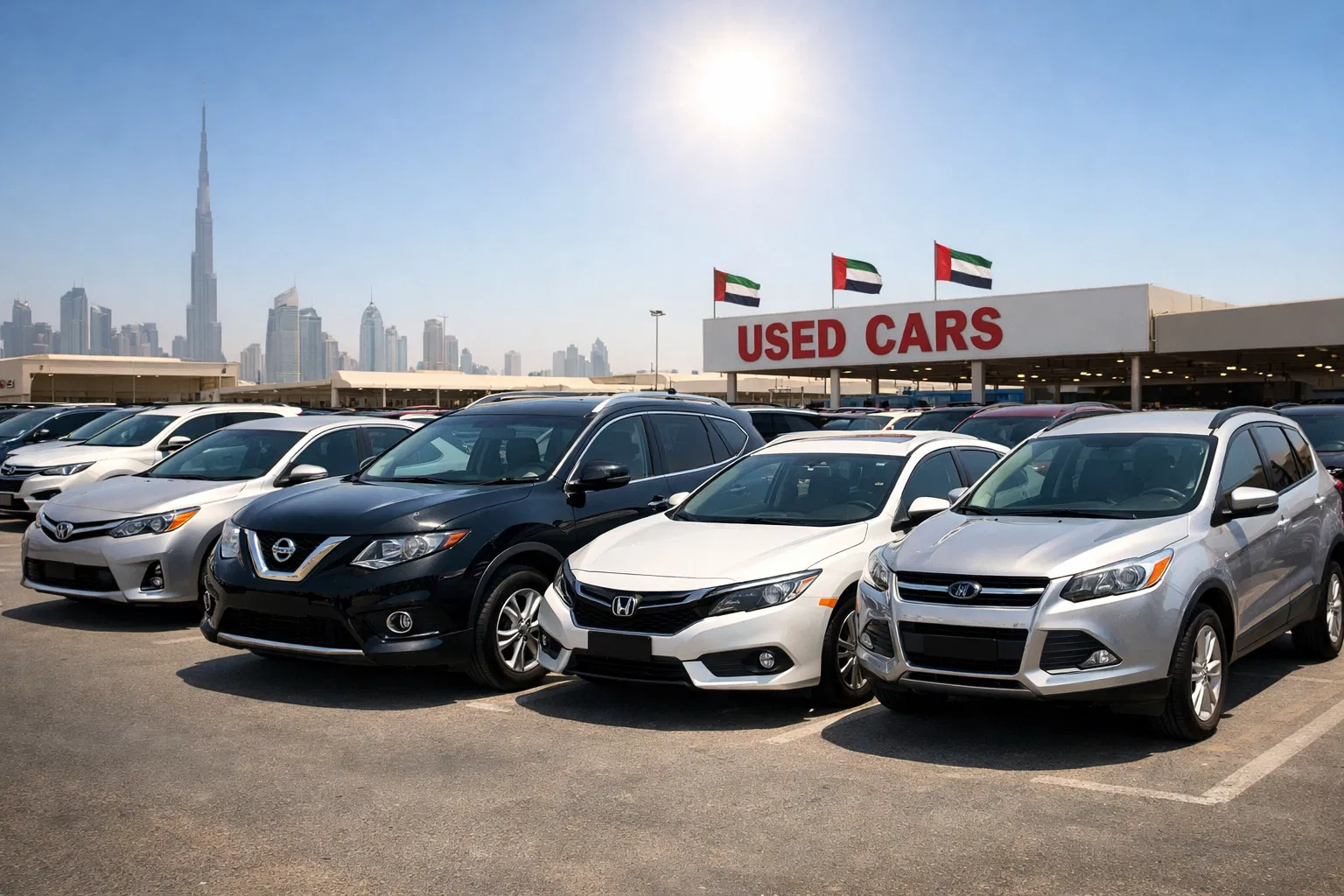
Reliable models like Toyota, Nissan, and Honda dominate the UAE used car market for good reason — they handle the heat better than most alternatives.
Toyota Camry (2015–2019) — Excellent reliability and strong cooling system. GCC-spec models are the norm. Very common in the UAE market, which means good parts availability and competitive pricing.
Nissan Maxima (2014–2018) — Larger cooling system than the Altima and good power delivery. Check for transmission smoothness and any overheating history.
Chevrolet Malibu (2013–2015) — Good value and strong AC system. Less common than Toyota or Nissan, so parts may take longer to source. Check for any electrical issues.
Best Cars Over AED 60,000
Toyota Land Cruiser (2010–2015) — The gold standard for UAE conditions. Built specifically for extreme heat and rough roads. Strong cooling system, reliable transmission, and excellent resale value. GCC-spec models are standard.
Nissan Patrol (2010–2014) — Similar to the Land Cruiser in terms of heat tolerance and reliability. Strong cooling system and durable transmission. Good resale value.
BMW 3-Series (2012–2015) — If you prefer a luxury sedan, the 3-Series has a good cooling system and strong AC. However, parts are more expensive and servicing costs are higher. Stick with GCC-spec models.
Cars to Avoid in the UAE
Parallel import European cars — European cars (Volkswagen, Audi, Mercedes) built for cooler climates often struggle with UAE heat. AC failures and cooling system problems are common. If you buy one, ensure it is GCC-spec and has full service history.
High-mileage American cars — American cars with over 150,000km often show signs of heat stress. Transmission problems, AC failures, and electrical issues are common. The cooling systems are not as robust as Japanese equivalents.
Very old cars (pre-2010) — Older cars have older cooling technology and often show signs of heat damage. Rubber seals are degraded, AC systems are worn, and electrical systems are unreliable. Avoid unless the car has exceptional service history.
Cars with unknown service history — In the UAE, a car without documented service history is a red flag. Heat stress accelerates wear on cooling systems, AC, and transmission fluid. A car that has not been regularly serviced will have hidden problems.
What to Check for Heat-Related Wear
When inspecting a used car in Dubai, look specifically for signs of heat stress:
- AC performance: The AC should cool the cabin to comfortable temperature within 2–3 minutes. If it takes longer or does not get cold enough, the compressor or refrigerant may be failing.
- Coolant level: Check the coolant level when the engine is cold. Low coolant indicates a leak or excessive evaporation — both are signs of cooling system stress.
- Transmission fluid colour: Transmission fluid should be bright red or pink. Dark brown or black fluid indicates heat damage and potential transmission problems.
- Rubber seals: Check door seals, window seals, and hose connections for cracking or hardening. Heat degrades rubber faster than anything else.
- Dashboard cracking: Extreme heat causes dashboard plastic to crack and fade. Extensive cracking is a sign the car has been exposed to years of intense sun.
- Paint fading: Uneven paint fading (especially on the roof and bonnet) indicates the car has spent years in the sun without protection.
Maintenance Tips for Hot Climate
If you buy a used car in Dubai, follow these maintenance tips to keep it running well in the heat:
- Change oil more frequently: In extreme heat, oil breaks down faster. Change oil every 5,000km instead of the standard 10,000km.
- Check coolant regularly: Top up coolant as needed and flush the cooling system every 2 years instead of every 3 years.
- Service the AC system: Have the AC serviced annually to ensure the refrigerant level is correct and the compressor is working efficiently.
- Use a sunshade: Park in the shade whenever possible and use a sunshade on the windscreen to reduce interior heat.
- Check tyre pressure: Heat causes tyre pressure to increase. Check pressure weekly and adjust as needed.
- Replace air filters more often: Dust and sand in the UAE air clog air filters faster. Replace filters every 10,000–15,000km.