Used Car Inspection Checklist UAE – Complete Pre-Purchase Guide
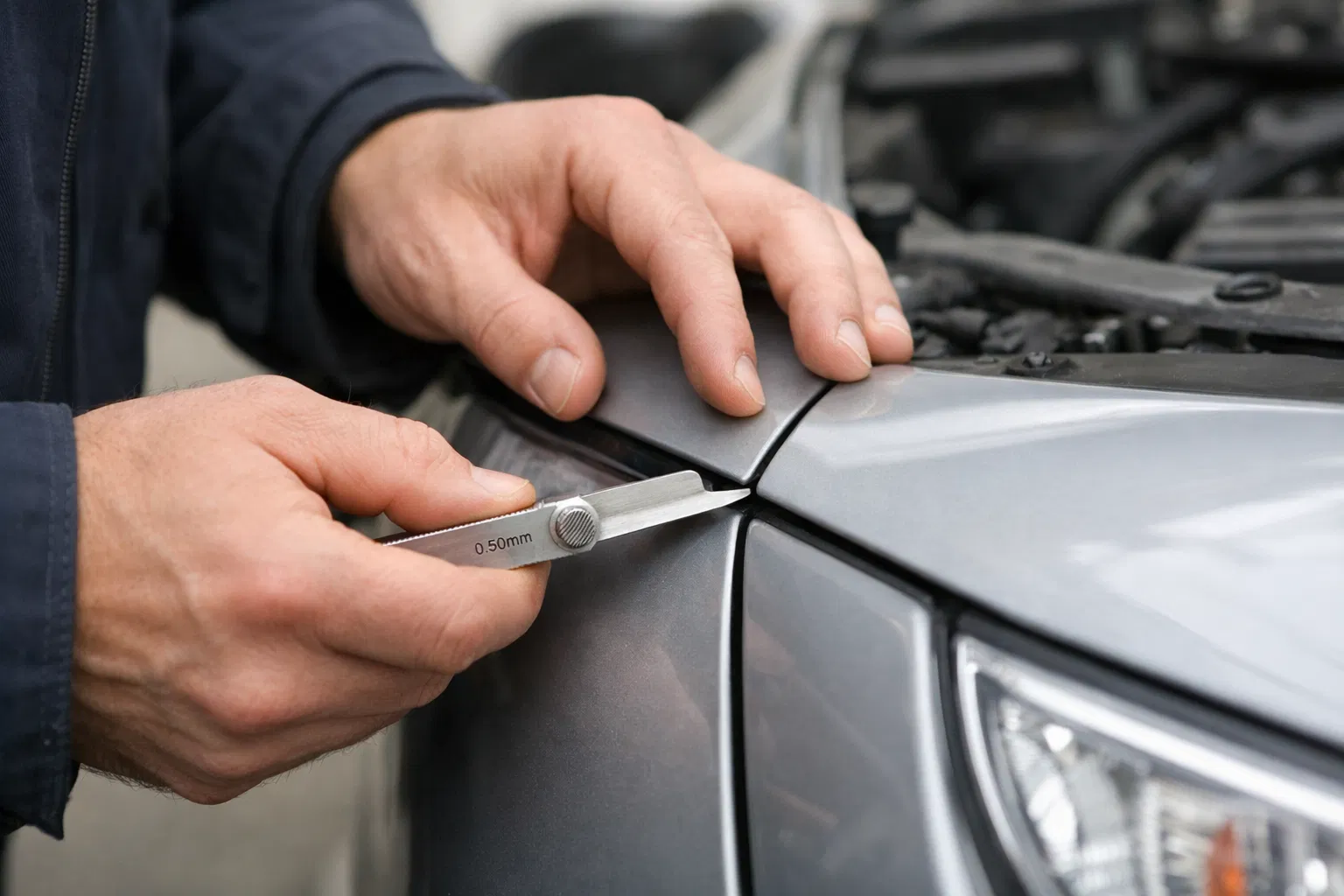
Professional inspection tools like paint depth gauges and panel gap tools reveal accident damage that is invisible to the naked eye.
In this guide:
- Complete exterior inspection checklist — paint, panels, rust, and accident damage
- Interior inspection — seats, dashboard, electrics, and odometer verification
- Engine bay inspection — oil condition, leaks, and component age
- Mechanical test drive checklist — what to listen for and feel for
- Red flags that mean walk away immediately
- When to hire a professional inspector
An independent pre-purchase inspection is the single most important step in buying a used car in the UAE. But before you hire a professional inspector, there is a thorough checklist of things you can examine yourself during the viewing. This guide covers every point a buyer should check — and the red flags that mean you should walk away immediately.
Exterior Inspection
Start your inspection outside the car, in daylight. Walk slowly around the entire vehicle and look for these specific issues:
Paint and Panels
- Look for colour mismatches between panels — a door, bonnet, or boot lid that is even slightly different in shade indicates a repaint, which almost always means accident repair.
- Crouch down and look along the side of the car from the front and rear — wavy or rippled bodywork indicates filler underneath, another sign of accident damage.
- Check panel gaps — door gaps, boot gaps, and bonnet gaps should be even and consistent on both sides. Uneven gaps indicate structural damage.
- Look for overspray — paint on rubber seals, window frames, or trim indicates the car was repainted.
- Check for orange peel texture on the paint — this is a sign of poor quality repainting.
Rust and Corrosion
- Check the underside of the doors for rust or corrosion — this is common in flood-damaged vehicles.
- Look at the wheel arches for rust or underbody damage.
- Check the bottom of the doors and sills for rust spots.
- In the UAE, rust is a sign of either flood damage or poor maintenance.
Tyres and Wheels
- Check tyre age — look at the sidewall for the DOT code (four digits: week and year of manufacture). Tyres older than 5 years should be replaced.
- Check tyre tread depth — use a 1 dirham coin. Insert it into the tread. If the coin is fully visible, the tread is too shallow.
- Check for uneven tyre wear — this indicates suspension or alignment problems.
- Look for mismatched tyres — all four should ideally be the same brand and model.
Interior Inspection
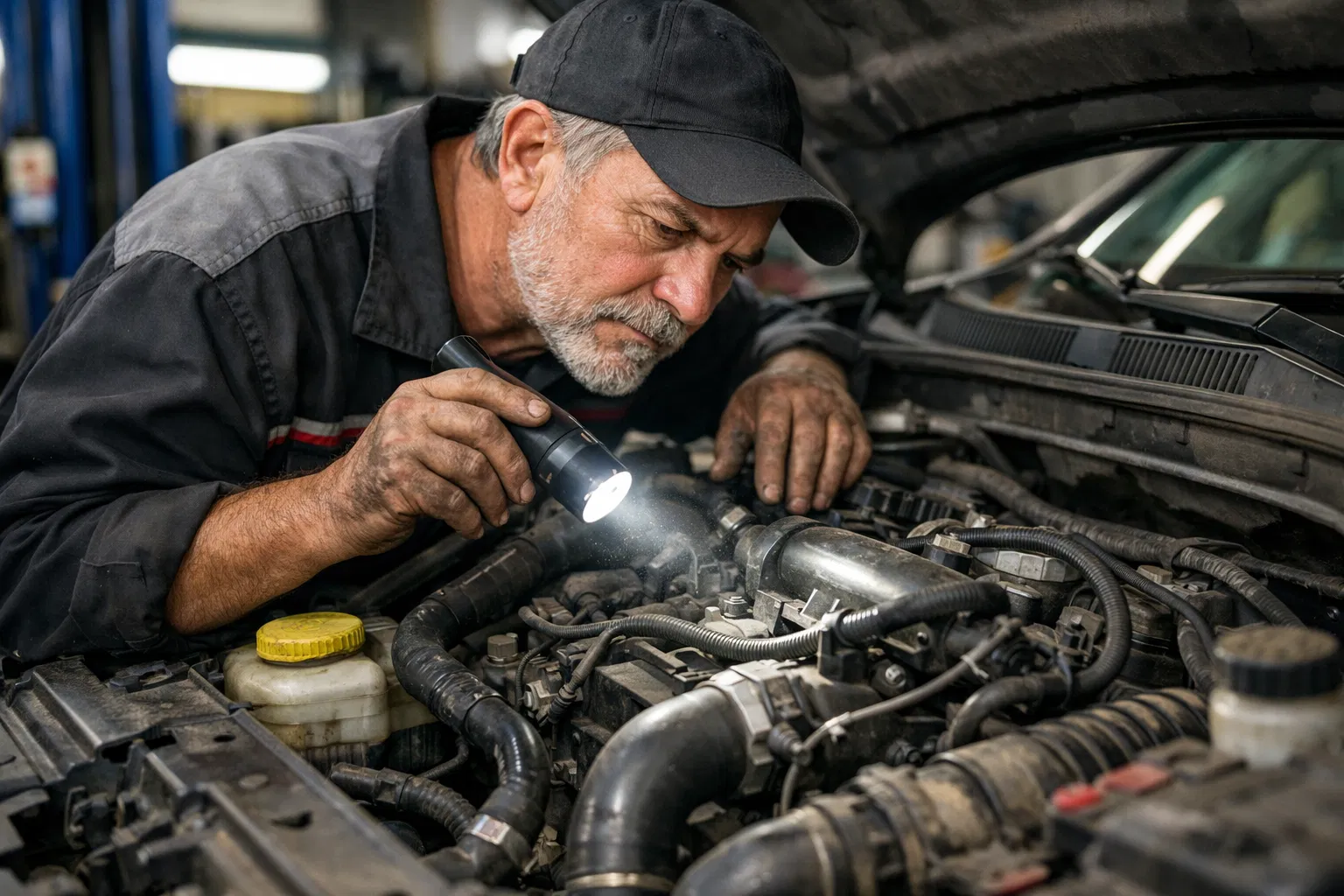
Engine bay inspection reveals oil leaks, component age, and maintenance history — critical information for assessing mechanical condition.
Seats and Upholstery
- Check for excessive wear on the driver's seat — this is a reliable indicator of actual mileage.
- Look for tears, stains, or damage to seats and interior panels.
- Check that all seat adjustments work smoothly.
Dashboard and Controls
- Check that all warning lights work when you turn on the ignition — then they should all go out once the engine starts.
- Test all electrical controls: windows, locks, wipers, lights, air conditioning.
- Check the odometer reading — does it match the stated mileage? Does it look tampered with?
- Look for cracks in the dashboard.
Smell and Cleanliness
- A strong air freshener smell can mask water damage or mould — signs of flood history.
- Musty or damp smells indicate water damage.
- Smell the carpets and floor mats — they should be dry.
Engine Bay Inspection
Oil and Fluid Condition
- Check the engine oil on the dipstick. It should be amber or light brown. Dark, black oil means it is overdue for a change.
- Check the coolant level — it should be between MIN and MAX marks. Low coolant can indicate a leak.
- Look for oil leaks around the engine block, oil pan, and hose connections.
- Check for fluid leaks on the ground under the car.
Engine Bay Appearance
- Look for fresh paint or sealant on the engine bay walls — this often indicates accident repair.
- Check for rust or corrosion on the engine block or components.
- Look for damaged or cracked hoses.
- Check that the radiator and cooling system components look original and well-maintained.
Battery and Electrical
- Check the battery — it should have a manufacturing date within the last 3 years.
- Look for corrosion on battery terminals.
- Check that all engine bay wiring looks intact and original.
Test Drive Checklist
During the test drive, listen and feel for these specific issues:
Engine Startup and Idle
- The engine should start immediately without hesitation.
- Listen for knocking or rattling sounds from the engine at startup.
- At idle, the engine should run smoothly without vibration.
Acceleration and Power
- Accelerate smoothly from a stop — there should be no hesitation or jerking.
- Listen for knocking or pinging sounds under acceleration.
- The car should accelerate smoothly without loss of power.
Steering and Handling
- The steering should feel responsive and not overly loose.
- At higher speeds (80km/h+), there should be no vibration through the steering wheel.
- The car should not pull to one side when driving straight.
Braking
- Brake pedal should feel firm and responsive.
- Perform a hard braking event from 60km/h — the car should stop straight without pulling to one side.
- Listen for any grinding or squealing sounds.
Suspension and Comfort
- Drive over speed bumps and rough surfaces — listen for clunking or rattling from the suspension.
- The suspension should feel smooth and controlled, not bouncy or stiff.
Red Flags — Walk Away
If you observe any of these during your inspection, do not proceed with the purchase:
- Significant paint mismatches or panel damage — indicates major accident repair.
- Uneven panel gaps — suggests structural damage.
- Wavy or rippled bodywork — indicates filler and accident repair.
- Rust on the underside or wheel arches — suggests flood damage or poor maintenance.
- Musty or damp smells — indicates water damage or flood history.
- Engine knocking or rattling at startup — suggests internal engine damage.
- Vibration through the steering wheel at highway speeds — indicates wheel balance or suspension issues.
- Pulling to one side when braking — suggests brake or suspension problems.
- Hesitation or jerking during acceleration — indicates transmission or engine problems.
- Odometer that looks tampered with — never buy a car with odometer fraud.
When to Hire a Professional Inspector
After you have completed your own inspection and the car passes, arrange a professional pre-purchase inspection before any money changes hands. A professional inspector uses specialized equipment to detect issues you cannot see:
- Paint depth gauge — measures paint thickness to detect repaints.
- OBD diagnostic scanner — reads engine fault codes that do not trigger warning lights.
- Thermal imaging — detects water damage and hidden rust.
- Underbody inspection — checks for rust, damage, and flood history.
Professional inspections in Dubai cost AED 200–350 and take 2–4 hours. They are the most important money you will spend on a used car purchase. The inspection report becomes your negotiating tool — every issue found is a reason to reduce the price.